Driving in Bosnia & Herzegovina — Complete Guide 2026
Driving in Bosnia & Herzegovina — Complete Guide 2026
Driving in Bosnia and Herzegovina can feel like an adventure — and that’s not just because of the stunning scenery (though that’s a big part of it). The roads range from modern motorways to winding mountain passes that haven’t changed much in centuries, and understanding how to navigate them is key to having a smooth trip. Whether you’re planning to rent a car in Sarajevo, explore the coast at Neum, or head to Mostar, this guide covers everything you need to know about driving in Bosnia in 2026.
Do You Need an International Driving Permit?
If you’re visiting Bosnia and Herzegovina with a valid driving licence from an EU country, you’re all set — your EU licence is recognised automatically. If you’re coming from outside the EU, you should carry an International Driving Permit (IDP) alongside your home country’s licence. This is required by law in Bosnia, and without it, you may struggle to rent a car or, worse, face issues if you’re involved in an accident.
Road Rules and Regulations
Speed Limits
- Urban areas: 50 km/h
- Outside urban areas: 80 km/h
- Motorways: 130 km/h
Speed limits are strictly enforced, particularly on the motorways between Sarajevo and other major cities. Speed cameras are common, and fines can be hefty — expect to pay around €50-100 if you’re caught exceeding the limit.
Blood Alcohol Limit
The legal blood alcohol limit in Bosnia is 0.05%, which is lower than in some countries. The police conduct random breathalyser tests, especially at night and on weekends. If you’re caught over the limit, penalties are severe, and you could face immediate licence suspension.
Mandatory Equipment
Your rental car should come equipped with everything you need, but it’s worth checking:
- Warning triangle: Mandatory in case of breakdown
- First aid kit: Should be in the car
- Spare tyre: Check that your rental includes one (and the jack)
- Winter equipment: From November to April, winter tyres or chains are mandatory on most mountain roads
Seatbelt Laws
Seatbelts are mandatory for all passengers, front and rear. The police take this seriously, and you can be fined for not wearing one.
Understanding Bosnia’s Road Network
Motorways
Bosnia’s main motorway is the A1, which runs from Sarajevo south to Mostar and onwards to the Croatian border at Doljani. This is a modern, well-maintained toll road that makes getting around much faster. There’s also the A3 (also known as the Banja Luka-Gradiška motorway) in the north.
Toll Roads
Most motorways in Bosnia are toll roads. You pay at toll booths based on the distance you’ve travelled. Expect to pay around €15-25 for a one-way trip from Sarajevo to Mostar. Credit cards are accepted at most toll booths, but carrying some cash (Bosnian Marka or Euros) is always wise.
Secondary Roads
Outside the main motorways, roads can vary dramatically. The M17 (south from Sarajevo) and M4/M5 (towards Banja Luka) are generally in good condition. However, many secondary roads — particularly in mountainous areas — are narrow, winding, and occasionally potholed. Take your time, and don’t be afraid to stop and admire the view.
Renting a Car in Bosnia
What to Look For
When renting a car in Bosnia, consider these factors:
- Vehicle type: A compact car is fine for most of the main roads, but if you’re planning to explore national parks or mountain areas, a car with higher ground clearance is advisable
- Insurance: Basic collision damage waiver (CDW) is usually included, but check the excess/franchise amount. Consider taking out additional coverage if the excess is high
- Cross-border cover: If you plan to visit Croatia, Montenegro, or Serbia, make sure your rental includes cross-border travel — not all companies allow this
- Fuel policy: ‘Full-to-full’ is the most common and user-friendly option
Where to Rent
You can rent a car at Sarajevo Airport, in central Sarajevo, at other major airports, and in cities like Mostar, Banja Luka, and Tuzla. Booking online in advance is strongly recommended, especially in summer (June-August) when demand is high.
Costs
Expect to pay around €25-50 per day for a compact car in peak season. Prices drop significantly in the off-season (November to March), when you might find deals for €15-25 per day. Luxury cars and 4x4s cost more.
Driving in Winter
Winter driving in Bosnia requires extra caution. Snow is common in the mountains from December to March, and temperatures can drop well below freezing. Here’s what you need to know:
- Winter tyres: Mandatory on most roads from November to April
- Road closures: Some mountain passes may be closed after heavy snowfall — check conditions before setting out
- Daylight: Days are short in winter (sunset around 4:30 PM), so plan your driving for daylight hours
- Emergency kit: Carry warm clothing, food, and water in case you get stuck
Parking in Cities
Sarajevo
Parking in Sarajevo can be challenging, especially in the city centre. Look for guarded parking garages (marked with ‘P’) — they typically cost €3-6 per hour or €15-25 per day. Street parking is metred but can be hard to find during peak hours.
Mostar
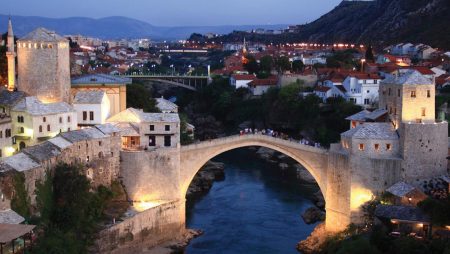
Mostar is easier — there are several parking lots near the Old Bridge, costing around €3-5 per day. The old town is pedestrianised, so you can’t drive right up to the bridge, but parking is within walking distance.
Other Cities
Parking in Banja Luka, Tuzla, and other cities is generally easier and cheaper than in Sarajevo.
Border Crossings
If you’re planning to cross into neighbouring countries, here’s what you need to know:
Bosnia-Croatia
The most common crossings are at:
- Doljani: South of Mostar, near Neum (to Dubrovnik area)
- Gradiška: North of Banja Luka (to Zagreb area)
- Ivan-Sedlo: Near Sarajevo (to Split and the Dalmatian coast)
At peak times (summer weekends), expect queues of 30-60 minutes at popular crossings.
Bosnia-Montenegro
The main crossing is at Hadžići (south of Sarajevo) on the road to Podgorica. Allow extra time as the road on the Montenegrin side is more mountainous.
Bosnia-Serbia
Crossings include Sremska Rača (near Bijeljina) and Ribarska (near Višegrad). The latter is particularly scenic if you’re heading to the historic town of Višegrad.
Fuel and Refuelling
Fuel stations are widely available in cities and along major roads. There are fewer stations in remote areas and mountain regions, so fill up whenever you have the chance. Unleaded petrol (95 and 98) and diesel are available everywhere. Prices are roughly €1.30-1.50 per litre, depending on the season.
Emergency Numbers
- Police: 122
- Fire: 123
- Ambulance: 124
- General emergency: 112
Final Tips
- Be patient: Driving in Bosnia can be slower than you’re used to. Enjoy the pace — it’s part of the experience
- Use navigation: Google Maps works reasonably well, but for remote areas, download offline maps
- Watch for animals: Dogs, goats, and cows can appear on roads, especially in rural areas
- Respect local drivers: Locals often drive faster than speed limits on mountain roads. Don’t feel pressured to match their speed
- Keep documents handy: Always carry your licence, IDP (if needed), and rental documents
Driving in Bosnia and Herzegovina is one of the best ways to explore this beautiful country. With a rental car, you’re free to discover hidden waterfalls, medieval towns, and mountain villages that most tourists never see. Just take your time, stay cautious, and enjoy the ride.