Sarajevo to Mostar Road Trip — The Best Route, Stops & What to See
The Ultimate Sarajevo to Mostar Road Trip Guide
The drive from Sarajevo to Mostar is one of the most spectacular road journeys in the Balkans — maybe even in Europe. In just a few hours, you transition from the mountainous capital of Bosnia to the sun-baked vineyards of Herzegovina, passing through historic towns, dramatic river canyons, and some of the country’s most iconic landmarks. Whether you’re planning a day trip or making it part of a longer Bosnia itinerary, this guide covers everything you need to know about the route, the stops, and what makes this drive so special.
How Long Does the Drive Take?
The distance from Sarajevo to Mostar is approximately 130 kilometres, and the drive takes between 2 and 2.5 hours under normal conditions. The most direct route is via the M17 highway, which runs south from Sarajevo through the town of Konjic before continuing to Mostar. This is a well-maintained road for most of the way, though the sections through the mountains can be winding.
If you take the scenic route via Jablanica (the M16.1), add about 30-45 minutes to your journey, but the extra time is absolutely worth it. This route follows the dramatic Jablanica Lake and passes through the town of Jablanica, where you can stop for lunch by the river.
Stop 1: The Tunnel of Hope (Tunel Spasa)
Before you even leave Sarajevo, consider a quick detour to the Tunnel of Hope on the outskirts of the city. This 335-metre tunnel was carved by hand during the Bosnian War (1993-1995) to connect the besieged city with the outside world. Today, a small section has been preserved as a museum, offering a powerful glimpse into Sarajevo’s wartime history. It’s an emotional but important stop that sets the context for everything you’ll see in Bosnia.
Stop 2: Konjic — The Gateway to Herzegovina
About an hour south of Sarajevo, the town of Konjic makes an ideal first stop. Sitting at the confluence of the Neretva and Buna rivers, this small town is known for its 17th-century Ottoman bridge (mostar) — which actually predates the famous bridge in Mostar. The old town is charming, with stone buildings, cafes, and a relaxed atmosphere.
Konjic is also the last major town before the road starts climbing into the mountains, so it’s a good place to fuel up (both your car and yourself). There are several petrol stations and restaurants along the main road.
Where to Eat in Konjic
Look for restaurants serving fresh trout from the Neretva River — the local specialty is ‘pastrmka na raznju’, grilled trout on a spit. It’s simple, delicious, and uniquely local. Pair it with a glass of local Herzegovinian wine for the full experience.
Stop 3: Jablanica Lake and the Scenic Route
If you want to take the scenic route, turn off at Konjic towards Jablanica. The road follows the edge of Jablanica Lake, a stunning body of water created by the damming of the Neretva River. The lake is surrounded by mountains, and on a clear day, the reflections are incredible.
In the town of Jablanica itself, you can visit the Battle of Neretva monument, commemorating the WWII battle that was a turning point in Yugoslav partisan history. There’s also a small museum dedicated to the battle. It’s a fascinating stop for history enthusiasts, though even if history isn’t your thing, the views from the monument are worth the short walk up.
Stop 4: Blagaj — The Dervish Monastery
Regardless of which route you take, the final approach to Mostar takes you past Blagaj — and this is a stop you absolutely cannot miss. The Blagaj tekke (Dervish monastery) is one of the most photographed places in Bosnia, and for good reason. Built in the 16th century, the monastery is perched directly at the mouth of a massive cave, where the Buna River emerges from underground. The combination of the turquoise water, the limestone cliff face, and the centuries-old wooden building is genuinely breathtaking.
You can visit the monastery and explore the surrounding area. There’s a small cafe next to the water where you can sit and soak it all in — it’s particularly magical in the early morning when the light is soft and the crowds haven’t arrived yet.
Stop 5: Počitelj — A Frozen Medieval Town
A few kilometres before Mostar, the small town of Počitelj is worth a quick stop — or even a longer visit if you have time. Perched on a hill overlooking the Neretva River, Počitelj is a beautifully preserved Ottoman-era town with medieval roots. The stone walls, the clock tower, and the crumbling mosque create an atmosphere that feels frozen in time.
Unlike Mostar, which was heavily damaged during the 1990s war, Počitelj was largely spared, which is one reason it feels so authentically old. Spend an hour wandering the narrow streets, climbing to the fortress for panoramic views, and enjoying a coffee in one of the family-run cafes.
Arriving in Mostar
As you approach Mostar, you’ll start to see the famous Stari Most (Old Bridge) looming in the distance. The city is built around the Neretva River, and the contrast between the old Ottoman quarter on one side and the newer Austro-Hungarian-influenced streets on the other is striking.
Park near the old bridge (there are several parking lots, around €3-5 for the day) and explore on foot. The cobblestone streets of Baščaršija are perfect for wandering, and you’ll find plenty of places to eat, shop, and just soak up the atmosphere.
What to See and Do in Mostar
The Old Bridge (Stari Most)
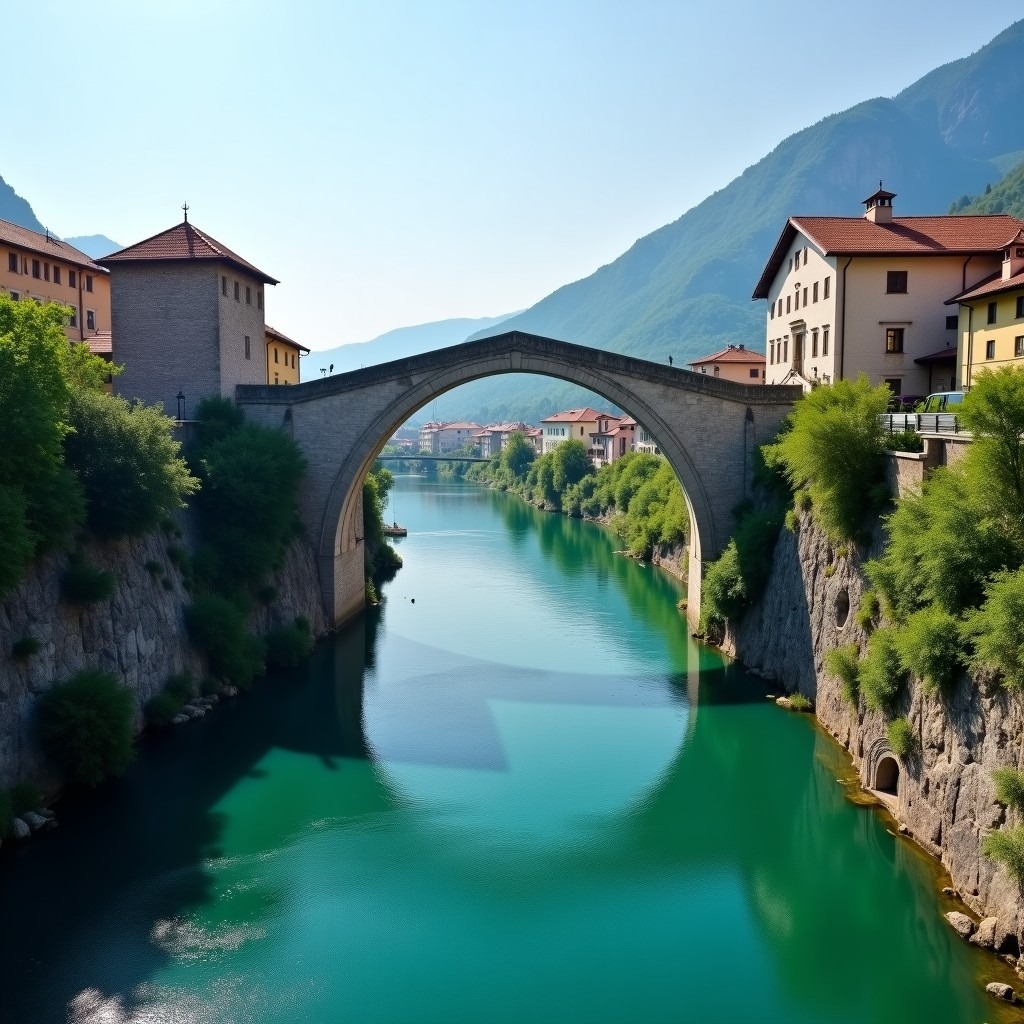
The icon of Bosnia — the Stari Most is a UNESCO World Heritage Site and one of the most recognizable bridges in the world. Built in 1566 by the Ottoman sultan Suleiman the Magnificent, it spans the Neretva River in a single graceful arch. Climb the towers on either side for views over the city, or simply sit on the banks of the river and watch the world go by.
Kriva Ćuprija (Crooked Bridge)
A smaller but equally charming bridge in the old town, the Kriva Ćuprija was built in 1558 as a model for the larger Stari Most. It’s a beautiful spot, particularly at sunset.
The Old Bazaar (Baščaršija)
The traditional Turkish bazaar is the heart of the old town, with copper workshops, souvenir shops, coffee houses, and restaurants. Look for the characteristic ‘ćevapi’ (grilled minced meat) — they’re the local fast food and absolutely delicious.
Karađoz Mosque
The largest mosque in Mostar, built in 1557. The minaret offers panoramic views over the city if you’re willing to climb the steep stairs.
Extending Your Trip: Kravice Waterfalls
If you have an extra few hours, the Kravice waterfalls are about 40 minutes from Mostar and are well worth the detour. These tiered waterfalls are often compared to a smaller version of Niagara, and in summer, you can swim in the pools below. It’s particularly beautiful in late spring when the water flow is strongest.
Tips for the Sarajevo to Mostar Drive
Road Conditions
The M17 highway is generally in good condition, though mountain sections can be winding. Drive carefully, especially after rain, as the roads can become slippery. In winter (December to February), check weather conditions before setting out — snow is common in the mountains.
Border Crossings
Technically, you’re staying entirely within Bosnia and Herzegovina on this route, so there are no border crossings. However, if you want to extend your trip to Dubrovnik or the Croatian coast, you will cross into Croatia at the Neum border crossing (south of Mostar).
Fuel and Food
Fill up in Sarajevo or Konjic — there are fewer facilities as you get closer to Mostar. The towns along the route have basic amenities, but don’t expect large shopping centres or fast food chains.
Hiring a Car
To make the most of this road trip, hiring a car is the way to go. It gives you the flexibility to stop where you want, when you want, rather than being tied to bus schedules. Check out our car hire in Sarajevo options to find the best deal.
Final Thoughts
The Sarajevo to Mostar road trip is more than just a journey between two cities — it’s a journey through history, landscape, and culture. From the mountains around Sarajevo to the vineyards of Herzegovina, every kilometre offers something new. Whether you do it in a day or spread it over a few days with overnight stops in Konjic or Blagaj, it’s an experience that will stay with you long after you’ve crossed the iconic Stari Most.