Bosnia Waterfalls Road Trip: Una, Kravice & Pliva Lakes
Bosnia has a waterfall problem. Not a shortage of them — the opposite. The country is saturated with rivers, gorges, and karst geology that produces waterfalls at a density that most Western European tourists have no idea about. The ones that make it into travel guides are already impressive. The ones that don’t — locals-only spots like Kravice — are sometimes better.
This road trip connects three of the most spectacular water features in Bosnia: Una National Park in the northwest, Kravice near Mostar in Herzegovina, and the Pliva Lakes and Mill near Jajce in central Bosnia. You can do all three in a long weekend with a car. You could also do just one and build a longer trip around it.
Either way, you need a car. There’s no public transport to any of these places worth mentioning. And the driving between them is, frankly, part of the point.
Stop 1: Una National Park — Štrbački Buk
Location: Bihać, northwest Bosnia | From Sarajevo: ~3.5 hours (280 km) | From Zagreb: ~2 hours (170 km)
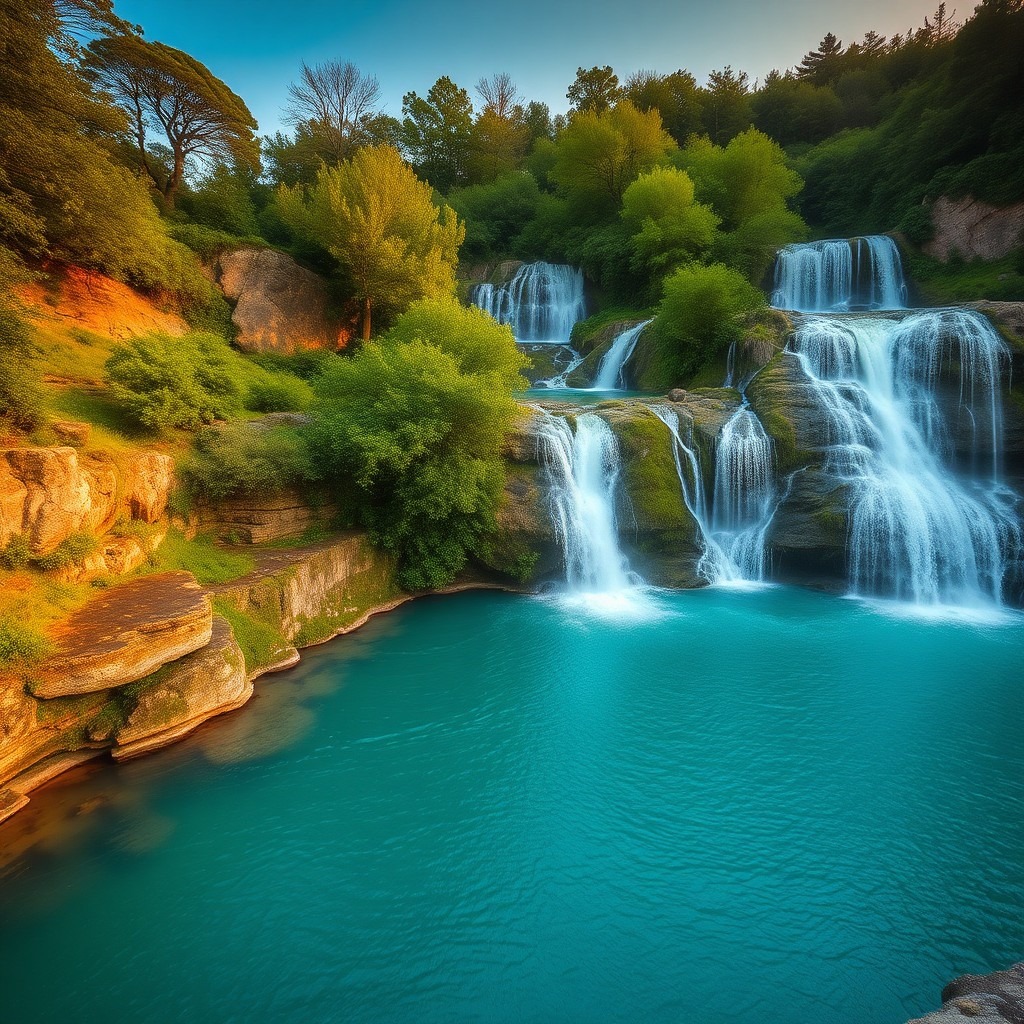
Štrbački Buk is on the shortlist for the most beautiful waterfall in Europe, and it’s a statement that holds up in person. The Una River here drops over a series of wide travertine steps — the widest section is over 150 metres across — into an emerald pool below. The water is a shade of blue-green that you assume is enhanced in photos until you’re standing in front of it and it’s genuinely that colour.
The waterfall is within Una National Park, established in 2008. The park protects the Una and Unac rivers and their entire watershed — the water here is some of the cleanest river water in Europe. There are established walking trails from the village of Martin Brod (the nearest settlement) to the viewing platforms above the falls.
What to do here:
- Walk the marked trails to the main viewpoints — allow 2-3 hours to do it properly
- Kayaking and rafting on the Una is excellent — several outfitters in Bihać and Martin Brod offer guided trips
- Swimming is possible below the falls in calmer sections in summer
- The village of Kulen Vakuf, 8 km downstream, has old watermills on the river worth seeing
Best time to visit: May and June. The snowmelt from the Dinaric Alps pushes the Una to full flow — the waterfall is at its most dramatic and the water temperature is still cold enough to be refreshing. July and August are busy and hot; September is a good second choice.
Eat here: Restaurant Una in Martin Brod does freshwater fish from the river (trout and grayling) cooked simply, the way it should be. Get the grilled trout. The bread and local cheese are made in the region — order both.
Stop 2: Kravice Waterfalls
Location: 40 km northwest of Mostar, Herzegovina | From Martin Brod: ~4.5 hours (290 km) | From Mostar: 45 minutes (40 km)
Kravice is what happens when the Trebižat River hits a wide arc of travertine and drops 26 metres into a swimming hole. It’s shaped like a horseshoe — the falls curve around a natural pool, with the cascade coming from multiple directions at once. In May and June, the volume of water is extraordinary. In summer, the pool is warm enough to swim in and packed with locals who’ve been coming here for generations.
This is the place you bring your own towel, stay for three hours, and wonder why you haven’t been coming here every summer. Western European tourists are starting to discover it, but it’s still fundamentally a local spot — Herzegovinian families, people from Mostar, a few Sarajevans. No big tourist infrastructure. A small entrance fee (usually 5-10 KM per person). A few food stands selling ćevapi and beer.
Practical notes:
- The road from the main E73 highway to Kravice is well-signposted — follow signs from the village of Ljubuški
- Parking costs a small fee in summer; get there before 10am to avoid the afternoon crowds
- There’s no formal changing facility — come ready to swim
- The path down to the pool is steep in places; wear proper shoes for the walk, flip-flops for the pool
Best time to visit: May–June for maximum waterfall drama. July–August for swimming (water is warm, crowds are higher). The falls run year-round but can be reduced to a trickle in September after a dry summer.
Eat here: There are simple food stands at the site in summer. For a proper meal, drive the 40 km to Mostar — Tima-Irma restaurant near the old bridge is excellent for traditional Bosnian food without the tourist markup.
Stop 3: Pliva Lakes and Mill — Jajce
Location: Jajce, central Bosnia | From Kravice: ~2.5 hours (160 km) | From Sarajevo: ~2 hours (135 km)
Jajce is worth a visit in its own right — a medieval fortress town where the Pliva River drops directly into the town in a 20-metre urban waterfall. It’s genuinely surreal to see a significant waterfall in the middle of a town square. But the Pliva Lakes, about 3 km upstream, are the hidden gem.
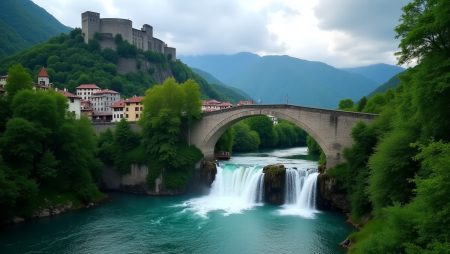
Pliva Lakes (Plivska jezera) are two glacial lakes connected by a channel. The upper lake is smaller and quieter; the lower lake is larger with clear views of the surrounding forest. At the channel between them sits a cluster of traditional wooden watermills — Mlinčići (the Little Mills) — arranged along the waterway. There are 17 of them, all built in the traditional Bosnian style, most dating to the early 20th century. They grind grain and they’re still functional.
This is one of those places that’s both genuinely beautiful and genuinely authentic. No entrance fee. No tour groups. Just the sound of water, old wooden structures, and locals who’ve been using these mills for a century.
Driving to Jajce: The road from Kravice north to Jajce goes through Bugojno and is good quality. The stretch along the Vrbas River gorge north of Bugojno is excellent driving — limestone cliffs, fast water, empty road.
Best time to visit: May–June for full lake levels. The waterfall in Jajce town is dramatic in spring. Avoid the Pliva Lakes in October–November when water levels can be low.
Eat here: Jajce has decent traditional restaurants in and around the old town. Look for restaurants serving locally caught freshwater fish from the Pliva — trout appears frequently on menus and is usually excellent.
The Full Road Trip: Logistics
Starting point: Sarajevo (best flight connections) or Zagreb (if coming from Central Europe)
Suggested 3-day route from Sarajevo:
- Day 1: Sarajevo → Bihać → Una National Park (Štrbački Buk). Sleep in Bihać or Martin Brod.
- Day 2: Martin Brod → Jajce → Pliva Lakes and Mill. Sleep in Jajce or continue to Mostar.
- Day 3: Mostar → Kravice Falls → Mostar → Sarajevo. Return car in Sarajevo.
Total driving: approximately 600 km over 3 days. Roads are good quality on the main routes. The Una National Park access road has some winding sections — take it easy, watch for livestock.
What to bring:
- Swimwear and a quick-dry towel (Kravice especially)
- Hiking shoes or trainers (Una park trails)
- Cash in Bosnian Marks (KM) — card acceptance is limited outside cities
- Downloaded offline maps — mobile data can be patchy in Una National Park
- Sunscreen from May onwards — the Mediterranean sun in Herzegovina is strong
Book Your Car and Go
This trip is genuinely better than most of what you’d find on a standard Western Europe itinerary, and a fraction of the cost. Bosnia is still affordable — petrol, food, accommodation, entrance fees all come in well below Western European prices.
Rent your car in Sarajevo through carhirebosnia.com — we cover car hire across Bosnia with no hidden fees and free cancellation on most bookings. If you’re combining this trip with Montenegro (Kotor, Budva), rentalcarsmontenegro.com has you covered for the Montenegrin leg. And if you want to search across the full region, 365carhire.com compares all options in one place.
The waterfalls are waiting. Go see them.