Sarajevo to Travnik and Jajce Drive | From €12/day | Car Hire Bosnia
Why Drive from Sarajevo to Travnik and Jajce?
The drive from Sarajevo to Travnik and Jajce covers about 165 km each way and takes you deep into central Bosnia — the historical heartland of the medieval Bosnian kingdom, where Ottoman viziers ruled from hilltop fortresses, the country’s most spectacular waterfall plunges directly into the town centre, and the cevapi rivalry between Travnik and Sarajevo is taken very seriously by locals. This is a two-town day trip that most visitors to Bosnia never think to do, and that’s exactly why you should. If you’ve picked up your hire car in Sarajevo, the M5/M16 route northwest through the Lašva valley gives you two UNESCO-adjacent towns, a medieval castle that held Bosnian kings, and cevapi in the town where they were arguably perfected — all with no hidden fees, because Bosnia doesn’t have toll roads.
Compare trusted suppliers and find the right vehicle — car hire in Sarajevo starts from around €12/day with free cancellation on most bookings.
Route: Sarajevo → Travnik → Jajce
Sarajevo to Travnik (90 km, ~1h 30min)
Take the M17 west out of Sarajevo through the suburb of Ilidža and into the mountains — within 20 minutes the city disappears and you’re climbing through pine forests past the town of Kiseljak. The road follows the Lašva River valley for most of the way, with the Vlašić mountain massif rising on your left. At the town of Vitez, you’ll see the sign for Travnik — turn north and follow the road along the river for the final 15 km. The road is two-lane throughout, mostly well-paved, but watch for sudden potholes around Vitez — this is Bosnia’s industrial centre and the heavy truck traffic takes a toll on the road surface. The drive is scenic without being dramatic — green valleys, red-roofed villages, and the minarets of Travnik appearing on the hillside about 10 minutes before you arrive.
Travnik to Jajce (75 km, ~1h 15min)
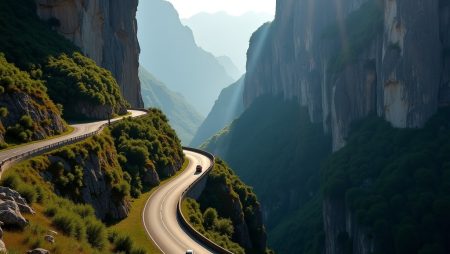
From Travnik, continue northwest on the M16 through the Vrbas River canyon. This is where the drive gets genuinely spectacular — the road hugs the right bank of the river as it carves through a limestone gorge, with cliffs rising on both sides and the turquoise-green water of the Vrbas rushing below. About 40 minutes out of Travnik you’ll pass through Donji Vakuf, a small town with a striking 16th-century stone mosque at the river crossing. From there, Jajce is another 30 minutes north — the road opens into a wider valley and you’ll spot the fortress first, then the Pliva waterfall as you descend into the town.
Stop 1: Travnik — Ottoman Viziers, Hilltop Fortress, and Bosnia’s Best Cevapi
Travnik was the seat of the Ottoman viziers for 150 years (1699–1850), and the town still feels like it — more minarets than any Bosnian town its size, two iconic clock towers, and a beautifully preserved old town that runs along the Lašva River. The main attraction is the Travnik Fortress (Stari Grad), built in the 15th century on a hill overlooking the town. Park in the centre and walk up via the stone path — it’s steep but only takes about 15 minutes. Entry costs 3 KM (€1.50). The ethnographic museum inside the fortress has rooms furnished in Ottoman style, and the views from the walls looking down over Travnik’s red roofs and minarets with Vlašić mountain behind are genuinely spectacular.
The coloured mosque (Sulejmanija, or the Painted Mosque) in the lower town, with its intricate arabesque wall paintings dating from the 18th century, is one of the most beautiful mosques in the Balkans and almost never visited by tourists. The nearby Plava Voda (Blue Water) spring feeds a series of old watermills and restaurants — for lunch, the trout restaurants right at the spring source serve fresh fish caught that morning, grilled over wood fires. The setting, with the spring water rushing through wooden channels under the restaurant terrace, is unforgettable.
And then there’s the cevapi. Travnik’s version uses a different meat ratio than Sarajevo’s — leaner, with less garlic — and the Travnik locals will tell you theirs is the original and superior recipe. Hari in the old town (right next to Plava Voda) is the most famous cevabdzinica in Travnik, serving only cevapi and yoghurt since the 1970s. Expect a queue at lunchtime, especially on weekends.
Time in Travnik: 2.5–3 hours including lunch.
Stop 2: The Pliva Waterlakes — Bosnia’s Hidden Lakes (20 minutes from Jajce)
Before reaching Jajce, turn off the M16 about 5 km south of town towards the Pliva Lakes — two large, crystal-clear freshwater lakes that locals use for swimming, fishing, and kayaking. The real attraction is the collection of 20 wooden watermills on the small stream connecting the two lakes, a set of tiny rustic buildings from the Austro-Hungarian period that are now a protected national monument. On a weekday outside July–August, you’ll have them almost entirely to yourself. The lakes are surrounded by forested hills with picnic benches and cafés — it’s an excellent spot for a short walk and coffee before heading into Jajce.
Stop 3: Jajce — The Waterfall Town with a Medieval Heart
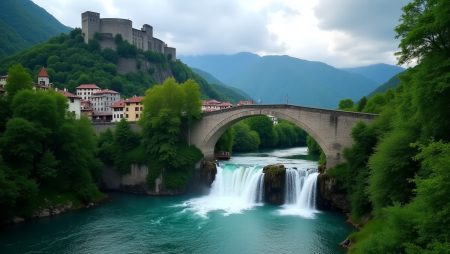
Jajce is the only town in Bosnia — and one of the few anywhere — with a waterfall in its very centre. The Pliva Waterfall drops 22 metres into the Vrbas River at the exact point where the old town begins, and the wooden viewing platform built right next to it puts you within metres of the falling water. Entry is 4 KM (€2) and it’s worth every pfennig — the combination of the falls, the Ottoman stone houses of the old town, and the 14th-century fortress on the hill above is Bosnia’s single most striking townscape.
The Jajce Fortress (14th century) sits at the top of the hill and was the seat of the last Bosnian king, Stjepan Tomašević, before the Ottoman conquest of 1463. From the fortress walls, you can see the entire town below — waterfall, minarets, red roofs, the Pliva lakes in the distance, and the Vrbas canyon stretching northwest. Entry is 3 KM (€1.50).
Below the fortress, the Catacombs — an underground church carved into solid rock in the 14th century, with a crypt containing the tomb of the Bosnian nobleman Hrvoje Vukčić Hrvatinić — is one of the most unusual historical sites in the Balkans. It’s cool and dark even in August. Entry: 2 KM (€1).
In the town itself, the Esma Sultana Mosque, built in 1749–50, is the only mosque in Bosnia named after a woman. It sits directly beside the waterfall and is still in active use — dress respectfully. The nearby Museum of the Second AVNOJ Session (where Tito’s Partisans effectively established post-war Yugoslavia in November 1943) is housed in a former sports hall and the exhibits are surprisingly good, with original documents, photographs, and uniforms from the wartime council.
Time in Jajce: 3–4 hours including the fortress, catacombs, and waterfall.
Practical Tips for the Sarajevo–Travnik–Jajce Drive
- Road conditions: The M17 from Sarajevo to Travnik is decent — mostly well-paved two-lane with occasional potholes near Vitez. The M16 from Travnik to Jajce through the Vrbas canyon is narrower but recently resurfaced in several sections. Drive carefully in the canyon sections — local drivers know every corner and overtake aggressively.
- No tolls anywhere: Bosnia has no toll roads. Your only costs are fuel and parking. No vignette needed.
- Fuel: Around 2.75 KM per litre (€1.40) — fill up in Sarajevo before leaving. Petrol stations are sparse between Travnik and Jajce.
- Winter driving: The Vlašić Pass near Travnik (if you take the mountain detour to the ski resort) requires winter tyres November–March. The main M17/M16 route is at a lower elevation and usually clear, but can get icy in January–February.
- Landmine safety: This route is entirely safe — the roads and towns are cleared. Do not walk off marked paths into forested hillsides; Bosnia’s landmine clearance is ongoing and while this area is largely cleared, the rule is: stick to paths and roads.
- Parking: In Travnik, park on the main street near Plava Voda (free). In Jajce, use the large car park below the fortress (3 KM/day).
FAQ: Sarajevo to Travnik and Jajce Drive
How long does it take to drive from Sarajevo to Travnik?
The 90 km drive from Sarajevo to Travnik takes about 1 hour 30 minutes on the M17 via Kiseljak and Vitez. The road is two-lane and follows the Lašva River valley. Add 30 minutes for mountain fog in autumn and winter.
Is Jajce worth the drive from Sarajevo?
Absolutely. Jajce is the only town in Bosnia with a waterfall in its centre — the 22-metre Pliva Waterfall plunges into the Vrbas River next to the old town. Combined with the 14th-century fortress, the underground catacombs, and the Pliva Lakes watermills, it’s one of the best day trips in the country.
Where is Bosnia’s best cevapi?
This is a fiercely contested question, but Travnik has a strong claim. Hari cevabdzinica in Travnik has been serving only cevapi since the 1970s, with a leaner, less garlic-heavy recipe than Sarajevo’s version. The cevapi rivalry between the two towns is very real — try both and decide for yourself.
Is it safe to drive from Sarajevo to Travnik and Jajce?
Yes — the M17 and M16 are main inter-city roads, regularly maintained and well-travelled. Drive cautiously in the Vrbas canyon sections where the road narrows and local drivers overtake. The entire route is cleared of landmines — stick to roads and marked paths.
How much time do I need for Travnik and Jajce in one day?
A full day — leave Sarajevo by 08:00 to give yourself 2.5–3 hours in Travnik (fortress, mosque, lunch), 3–4 hours in Jajce (fortress, catacombs, waterfall, museum), plus the Pliva Lakes watermills stop. Return to Sarajevo by 19:00–20:00.
Related Destinations
Planning more Bosnia drives? Check out our Sarajevo to Mostar road trip for Herzegovina, our Mostar to Banja Luka drive through central Bosnia, and the complete guide to driving in Bosnia for rules and road conditions across the country.