Experience the Beauty and Diversity of Bosnia and Herzegovina with a Road Trip from Sarajevo to Mostar
The M17 highway from Sarajevo to Mostar is 130 kilometres of cliff faces, emerald river water, and Ottoman stone bridges. It takes about two and a half hours if you drive straight through — but you won’t. You’ll stop for photos where the Neretva River bends into a horseshoe of turquoise below the road. You’ll pull over in Jablanica for lamb roasted on an open spit. You’ll detour to a 600-year-old village built into an amphitheatre of rock. The Sarajevo to Mostar road trip isn’t about the destination. It’s one of the best drives in Europe, and every kilometre earns its place on the list.
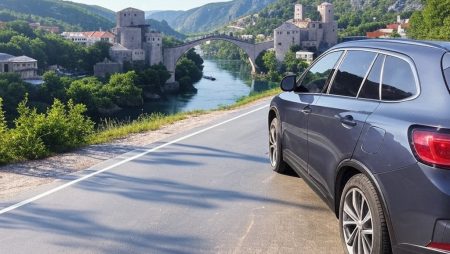
Bosnia is a country that reveals itself slowly. The motorway from Sarajevo starts in a wide valley flanked by mountains still scarred from the war. By the time you reach Mostar, the landscape has flipped — Mediterranean cypress trees, fig bushes, the air warmer and drier. In two hours you cross from continental Europe into something that feels closer to Dalmatia. Doing this drive in your own rental car means you set the pace. Stop when you want, eat where the truck drivers eat, and arrive in Mostar with the afternoon light hitting the bridge just right.
Why the Sarajevo to Mostar Drive Is One of Europe’s Best
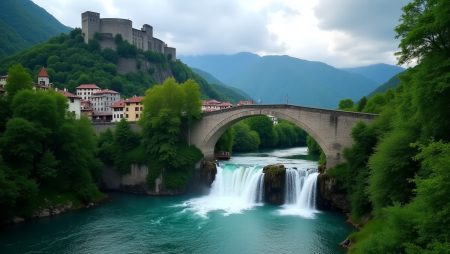
Most “great drives” in Europe are famous because mountains are tall or coastlines are dramatic. The Sarajevo–Mostar route earns its reputation differently: it follows a river through a canyon that tightens and opens like a lung breathing. The Neretva River is the star. It starts as a fast, cold mountain stream near Konjic and widens into a slow, green giant by the time it reaches Mostar. The colour is real — a mineral-rich, almost unreal turquoise that comes from the limestone geology of the Dinaric Alps.
The road itself is well-maintained, mostly two lanes, with new sections of motorway bypassing the most congested stretches. But the old road still runs parallel for much of the route, and that’s where you want to be. The old M17 hugs the canyon wall with guardrails that look optional and views that demand you pull over every ten minutes. It’s not fast. It’s not efficient. It’s the best kind of driving.
What makes this route special is the transition. Sarajevo sits at 500 metres above sea level, surrounded by mountains, with a continental climate. Mostar is at 60 metres, sheltered by hills, Mediterranean in feel. In winter you can leave Sarajevo in snow and arrive in Mostar to sunshine and 15°C. The landscape between them tells the story of that shift: pine forests give way to oak scrub, then to cypress and pomegranate trees. The smell changes too — from woodsmoke and pine resin to thyme and wild sage.
The Route: What You’ll See Along the Way
The drive starts by leaving Sarajevo on the M17 southbound. The first section runs through the Sarajevo suburbs and into the mountains. After about 30 kilometres you’ll reach the Ivan-sedlo pass, the highest point on the route at just under 1,000 metres. This is where the landscape changes — the northern side drains into the Bosna River system, the southern side into the Neretva. From here, you follow the Neretva all the way to the Adriatic.
The canyon section between Konjic and Jablanica is the highlight. The road squeezes between cliff and river, with tunnels cut through rock spurs. In summer the sun hits the water and the whole valley glows green. There are lay-bys every few kilometres — use them. Some of the best photos you’ll take in Bosnia are from these pull-offs, looking down at the river winding through the gorge.
After Jablanica the valley widens and the road straightens. The landscape softens into farmland and orchards. You’ll pass roadside stalls selling jars of honey, bottles of rakija, and sacks of mandarins in season. The final approach to Mostar brings you along the Neretva’s western bank, with the famous bridge appearing suddenly as you round the last bend.
Must-Stop Towns Between Sarajevo and Mostar
Konjic
About an hour south of Sarajevo, Konjic is your first major stop. The town straddles the Neretva with a six-arch Ottoman bridge at its centre, rebuilt after the war. The river here is fast and cold, popular with rafters in spring when the snowmelt swells the rapids. But the real reason to stop is Tito’s Bunker — a massive underground complex codenamed ARK D-0, built in total secrecy between 1953 and 1979. Three generations of Yugoslav workers didn’t know what they were building; the architect only revealed its purpose after Tito’s death. Tours run several times daily and need to be booked in advance through the visitor centre. It’s strange, impressive, and completely worth the detour.
Jablanica
Jablanica is famous for one thing: lamb. Specifically, lamb roasted on a spit over an open fire, served in restaurants that are basically concrete halls with plastic tablecloths. The town sits at a widening of the Neretva valley, created by a dam that also forms Jablanica Lake. Kovacević and Zdrava Voda are the two most famous spots — locals argue about which is better, but you can’t go wrong with either. Order half a kilo of lamb, a shopska salad, and a beer. It’ll cost about 20 KM and ruin you for lamb anywhere else.
Blagaj
Twelve kilometres southeast of Mostar, Blagaj is a short detour off the main road. The attraction is the Dervish monastery (tekija) built into the cliff face at the source of the Buna River. The water emerges from a cave at the base of a 200-metre cliff, already a full river from the moment it sees daylight. The monastery was built in the 16th century and is still active — you can go inside, but shoulders and knees must be covered. The water is so clear and cold that you can see every pebble on the riverbed. There’s a café on the opposite bank where you can drink tea and watch the current pour out of the mountain.
Počitelj
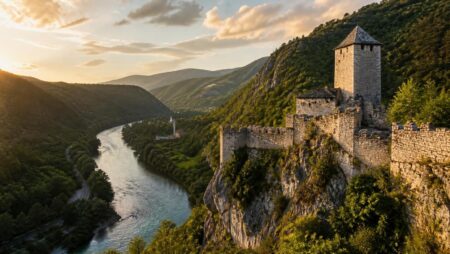
Thirty kilometres south of Mostar on the road toward the Croatian border, Počitelj is a medieval stone village built into a steep hillside above the Neretva. It dates from the 14th century and was an important Ottoman stronghold. The stone houses, mosque, and clock tower are built into the slope like an amphitheatre. Walk up to the fortress at the top — the steps are uneven and steep, but the view down the valley is worth the climb. Pomegranate trees grow wild, and in autumn the fruit splits open on the branches. Počitelj is a UNESCO World Heritage candidate and it feels like it: a perfectly preserved slice of Bosnian history with almost no modern intervention.
Mostar: More Than Just the Bridge
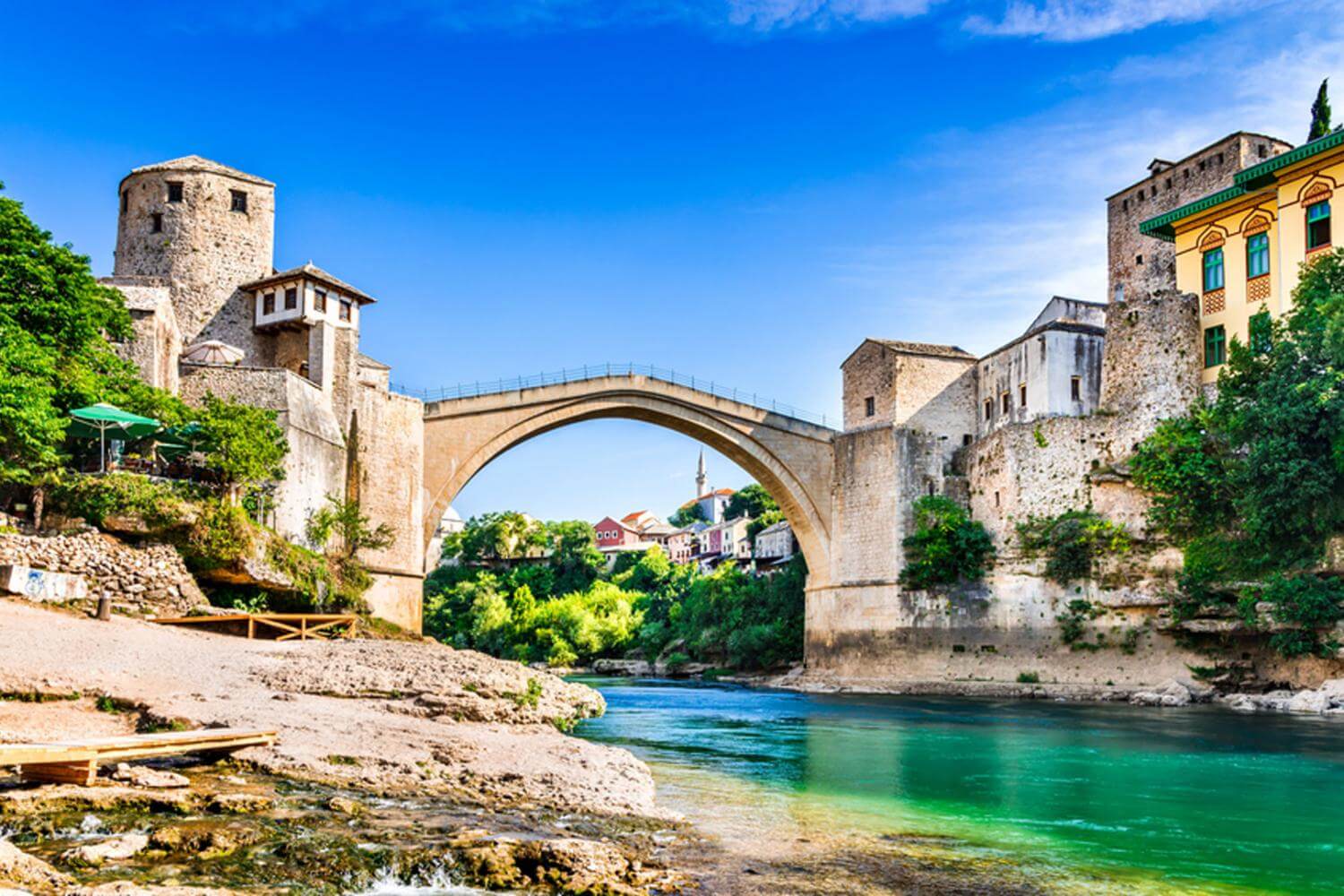
You’ll see the Stari Most (Old Bridge) long before you reach it — on postcards, magnets, guidebook covers. It’s famous for a reason. The original was built in 1566 by the Ottoman architect Mimar Hayruddin, who fled town the day before the scaffolding came down because he didn’t trust his own engineering. It stood for 427 years before being destroyed in the war in 1993. The current bridge is a faithful reconstruction, completed in 2004, using the same local stone and Ottoman techniques. It arches 24 metres above the Neretva and, in summer, local divers leap from the parapet into the freezing green water below. They’ll go once they’ve collected enough money from tourists — 50 KM is the going rate.
But Mostar is more than its bridge. The old town on both banks is a maze of cobbled lanes, carpet shops, jewellery workshops, and restaurants with terraces over the water. The Koski Mehmed Pasha Mosque, a short climb from the bridge, has a courtyard with the best view of the Stari Most — climb the minaret for an even better one. The mosque dates from 1617 and was also reconstructed after the war. Across the river, the crooked bridge (Kriva Ćuprija) is a smaller, older version of the main bridge, built as a trial run.
If you have time, drive 40 minutes south of Mostar to Kravice Waterfalls. It’s a wide curtain of water dropping 25 metres into a natural amphitheatre of rock, surrounded by a pool you can swim in. There’s a car park, a café, and an entrance fee of about 10 KM in summer. Go early or late to avoid the midday crowds. The road down is paved but steep and winding.
Practical Tips for Your Sarajevo to Mostar Road Trip
The M17 is well-surfaced and safe, but it’s still a mountain road. Overtaking opportunities are limited — be patient. Police checkpoints are common near town entrances; keep your passport or ID, driving licence, and rental documents in the glovebox. Speed limits are 60–80 km/h on most sections, 50 through towns. Fines are payable on the spot in cash, and you’ll get a receipt.
Fuel stations are frequent enough that you don’t need to worry, but fill up in Sarajevo or Konjic if you’re below half a tank — the stretch between Jablanica and Mostar has fewer options. Most stations have small shops with snacks, drinks, and decent coffee.
Consider dropping your car in Mostar if you’re continuing south to Croatia. Pick up at Sarajevo Airport and return at Mostar Airport for a one-way rental that saves you driving back. Alternatively, start in Mostar and drive north — the route is just as stunning in reverse. If your itinerary includes northern Bosnia, our Banja Luka Airport page has options for extending your trip.
Booking Your Car for the Journey
A car rental in Sarajevo is the easiest way to start this road trip. Book online, compare suppliers, and pick a car that suits mountain driving — a small SUV gives you better visibility and more confidence on narrow roads, but a standard hatchback handles the route just fine. Summer is peak season; book at least two weeks ahead. No hidden fees on our platform: the price you see includes everything except optional extras like additional drivers or child seats.
The Sarajevo to Mostar road trip is two hours of driving and a lifetime of memories. Fill the tank, point the car south, and let the river lead the way.