Explore the Beauty and Diversity of Sarajevo with Car Hire
Sarajevo is a city best understood from behind a steering wheel. Not because it’s huge — you can walk the old town in an afternoon — but because it spills across a long, narrow valley with neighbourhoods stacked up the hillsides like drawers in a cabinet. The tram runs east to west along the valley floor, but if you want to go up — to the fortresses, the viewpoints, the abandoned Olympic sites — you need a car. That’s where car rental in Sarajevo comes in.
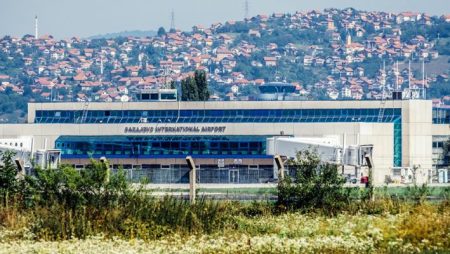
Public transport is cheap and reliable for the main drag, but it won’t take you to the Yellow Fortress for sunset, or to the start of the Trebević hiking trails, or to the spring of the Bosna river where the city’s name was born. Sarajevo rewards the curious, and curiosity here requires wheels. Pick up your car in the city centre or at the airport, and suddenly the entire valley is yours.
Why a Rental Car Unlocks the Real Sarajevo
Sarajevo’s geography is both its beauty and its limitation. The Miljacka River cuts through the middle, and the Dinaric Alps rise sharply on both sides. The tram system runs parallel to the river — useful, but one-dimensional. The hills are served by a patchwork of minibus routes that operate on vibes more than timetables. If you’re staying in an apartment up one of those hills — and many of the best Airbnbs are — you’ll be grateful for a car just to avoid the stairs.
More importantly, a car lets you move at your own pace through a city where every neighbourhood tells a different story. Drive five minutes from the Ottoman bazaar and you’re in Austro-Hungarian Vienna-in-miniature. Five minutes further and you’re among socialist-era apartment blocks that bear the scars of the 1990s siege. Another five and you’re on a forested mountain road with the city spread out below you like a map. A car rental in Sarajevo doesn’t just transport you — it connects the dots between the different versions of the city that coexist here.
The Old Town: Baščaršija and Beyond
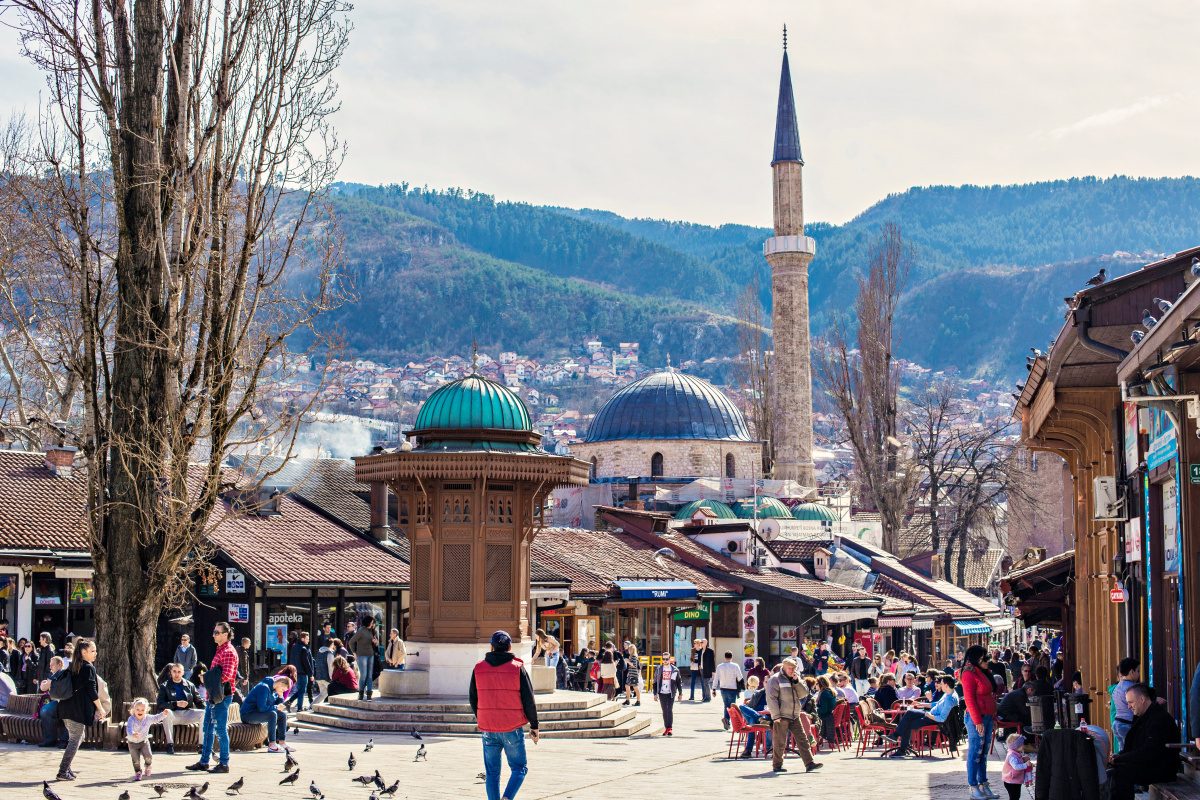
Park on the edge of the pedestrian zone — there’s a paid car park on Obala Kulina Bana near the City Hall — and walk into Baščaršija. This is the Ottoman heart of Sarajevo, a grid of cobbled lanes and courtyards dating back to the 15th century. The air smells of grilled meat, coffee, and copper. Craftsmen in tiny workshops still make coffee sets, trays, and jewellery by hand. The coppersmith street, Kazandžiluk, is named after the trade that’s been practised there since 1520.
The Gazi Husrev-beg Mosque sits at the centre of the bazaar. Built in 1531 and rebuilt after the war, it’s open to visitors outside prayer times. Across the square, the clock tower is one of the only ones in the world that tells lunar time — the hands are set so that midnight falls at sunset. Near the Sebilj fountain, a wooden structure that’s become the city’s postcard image, you’ll find pigeon-feeders and the entrance to the Baščaršija market hall (Gradska Tržnica). Inside, farmers sell cheese, cured meats, honey, and rakija from stalls that have barely changed in decades.
Don’t miss Morića Han, the last surviving caravanserai in Sarajevo. Built in 1551, it’s now a carpet shop and café, but you can still sit in the courtyard where Ottoman traders once stabled their horses. Order a Bosnian coffee — thick, unfiltered, served with a cube of Turkish delight — and imagine the city four centuries ago.
Sarajevo’s Hills and Views
The best thing about having a car in Sarajevo: driving up. The city is ringed by fortresses and viewpoints that are either inaccessible or expensive to reach without your own transport.
Start with the Yellow Fortress (Žuta Tabija), a short but steep drive up from the old town. The parking area is at the base of the ramparts; from there it’s a two-minute walk to one of the best sunset views in the Balkans. The city spreads west along the valley, white buildings and red roofs fading into the haze of the mountains. The White Fortress (Bijela Tabija) is higher up and less visited — the road is rougher but passable in a standard car. Both fortifications date from the 18th century and were part of the city’s defences against Austrian attacks.
For a different perspective, drive up to Trebević. The road winds through pine forest past the ruins of the Olympic bobsled track from 1984. The track is abandoned now, covered in graffiti, a strange and beautiful relic of a different era. You can walk the full length of it. The cable car from the city centre also reaches Trebević, but it’s expensive and the queue in summer can be an hour long. With a car, you drive up in twenty minutes, park at the top, and hike the ridgeline trails that look down on Sarajevo from 1,600 metres.
Museums, Markets, and Coffee Culture
Sarajevo’s museums are small, personal, and often housed in buildings that are themselves historical artefacts. The Tunnel of Hope museum, near the airport, preserves a section of the 800-metre tunnel dug under the airport runway during the siege. It was the city’s lifeline — the only way in or out for three and a half years. The museum is raw and effective: you walk through a preserved section of the tunnel itself. It’s a ten-minute drive from the city centre, and there’s free parking on site.
The Sarajevo Museum on Franjevačka street covers the city’s full history, from prehistory through the Ottoman and Austro-Hungarian periods to the siege. It’s housed in a former synagogue, which tells you something about the layers of this city. The permanent exhibition on the siege is sobering and essential viewing.
Between museums, do what Sarajevans do: drink coffee. Not the espresso-based drinks you find everywhere else — proper Bosnian coffee, brewed in a copper džezva and served in a small pot on a copper tray. The ritual matters: pour the coffee into your cup yourself, leaving the grounds in the pot. Drink it slowly. The best cafés for this are in the old town — try Miris Dunja for a traditional experience, or Ministry of Ćejf for a modern take. Neither requires a car once you’re in Baščaršija, but having one means you can hop between neighbourhoods without worrying about the last tram.
The Markale market is where Sarajevans do their daily shopping — fruit, vegetables, cheese, meat. It was bombed twice during the siege, in 1994 and 1995, with devastating casualties. Today it’s a thriving, noisy, wonderful place. Buy a bag of dried figs or a block of Travnik cheese for the road.
Practical Tips for Driving in Sarajevo
Driving in Sarajevo is manageable but requires some adjustment. The old town streets are narrow and often one-way. Google Maps works well for navigation, but it sometimes routes you down alleys that are barely wider than your car — if it looks too tight, it probably is. Trust your instincts.
Parking is the main challenge. Most of the city centre is paid parking, managed through the Sarajevo Parking app or SMS payment. The app is worth downloading — it lets you pay for exactly the time you need and extend remotely. Underground garages are available at BBI Centar and SCC shopping malls, both near the city centre. Street parking in residential neighbourhoods is free but competitive; look for white lines (free) versus blue lines (paid).
Winter driving from November through March means snow and ice. Sarajevo’s hills get slippery quickly. Winter tyres are mandatory and your rental will come with them fitted, but carry on driving cautiously — other drivers may not. The main roads are ploughed promptly; side streets may not be.
How to Book Your Sarajevo Car Rental
Booking a car rental in Sarajevo through our platform is straightforward. Enter your dates, compare cars and prices from multiple suppliers, and book in minutes. You can pick up in the city centre or at Sarajevo Airport — whichever suits your itinerary. No hidden fees: the price you see at booking is the price you pay.
Summer availability tightens up fast, especially for automatic transmissions and larger vehicles. Book at least two weeks ahead in July and August. If you’re planning to continue your journey beyond Sarajevo, look at our Mostar and Banja Luka airport pages — one-way rentals let you pick up in Sarajevo and drop off elsewhere, perfect for a linear road trip through the country.
Sarajevo is a city that gets under your skin. Give yourself the freedom to follow its winding roads all the way up.