Distance Between Sarajevo and Mostar | Driving Guide | Car Hire Bosnia
How Far Is Mostar from Sarajevo?
The driving distance between Sarajevo and Mostar is roughly one hundred and twenty-seven kilometres along the main road. In normal traffic and dry conditions, the journey takes about two hours and fifteen minutes door to door. Most of the route follows the M17 and E73 highways, which run parallel to the Neretva River through one of the most dramatic river canyons in the Balkans. It is the busiest intercity road in Bosnia and Herzegovina, and for good reason: it connects the two most visited cities in the country, and the drive itself is a highlight rather than a chore.
If you are flying into Sarajevo and planning a road trip south, this is the first major leg you will cover. It is also the route most travellers take when they rent a car in Sarajevo and return it in Mostar, or vice versa. The road is fully paved, well signposted, and accessible year round, though winter conditions in the mountains can add time and require caution. Understanding the exact distance, the driving time, and what you will see along the way helps you plan a realistic itinerary and avoid rushing through a part of the country that deserves your attention.
The Exact Distance and Driving Time
From Sarajevo city centre to Mostar old town, the distance is approximately one hundred and twenty-seven kilometres, or seventy-nine miles. The route is almost entirely on the M17, which becomes the E73 as you approach the Croatian border near Metkovi?. There is no faster motorway alternative, so every driver takes essentially the same road. The average speed is around sixty kilometres per hour, not because the road is poor, but because it winds through a narrow valley with tight bends, tunnels, and frequent speed restrictions.
In summer, with heavy tourist traffic and slower-moving vehicles, the drive can stretch to two and a half hours. In winter, fog and occasional ice on the higher sections near Konjic can add another fifteen to twenty minutes. At night, you should allow closer to two and a half hours regardless of season, because street lighting is limited and the road demands full concentration. The distance is short enough for a comfortable day trip, but long enough that you will want to stop at least once to stretch your legs and take in the scenery.
The road is not a motorway, so there are no service stations in the modern sense. Instead, you will pass through towns and villages where petrol stations, cafes, and small shops are available. The largest settlements along the route are Had?i?i, Konjic, and Jablanica, each offering fuel and food. If you are driving a rental car, make sure the fuel tank is at least half full when you leave Sarajevo, as the mountain section between Had?i?i and Konjic has no filling stations.
The Main Route: M17 and E73
The journey begins in Sarajevo, leaving the city on the M18 southbound before joining the M17 at the outskirts near Ilid?a. From here, the road climbs steadily into the Dinaric Alps, following the route that has connected central Bosnia with the Adriatic coast for centuries. The first section out of Sarajevo is a modern dual carriageway, but this soon narrows to a single lane in each direction as the valley tightens.
The M17 was rebuilt extensively after the war, and the surface is generally good, though potholes do appear after harsh winters. The road runs alongside the railway line that connects Sarajevo with the port of Plo?e in Croatia, and you will often see freight trains sharing the narrow valley floor. The landscape changes quickly. Within half an hour of leaving Sarajevo, you are surrounded by steep limestone cliffs, dense pine forest, and the first glimpses of the Neretva River far below.
Signposting uses both Latin and Cyrillic script, which can be confusing if you are not used to the Cyrillic alphabet. The key towns are clearly marked, and the signs for Mostar appear regularly. GPS navigation works well on this route, though mobile signal can drop in the tunnels and the deepest parts of the canyon. Downloading offline maps before you set off is a sensible backup. The road is not technically difficult, but it requires constant attention. Overtaking opportunities are limited, and local drivers tend to know the bends by heart, so do not feel pressured to keep up with faster traffic.
What to Expect at Tunnels and Galleries
There are several short tunnels and rock galleries along the M17, especially between Konjic and Jablanica. These were carved into the cliff face to protect the road from rockfalls and avalanches. The tunnels are unlit, so switch on your headlights even in daylight. Some are only a few hundred metres long, but the sudden darkness after bright sunshine can be disorienting. Sunglasses are useful, but take them off before entering each tunnel to give your eyes time to adjust.
The galleries are essentially roofed sections of road with open sides. They offer shade on hot days but can be slippery inside after rain. Keep a steady speed and watch for water pooling on the road surface. These engineering features are part of what makes the drive memorable, but they also remind you that this is a mountain road built in a challenging environment, not a flat coastal highway.
Scenic Stops Along the Way
One of the best reasons to drive rather than take the bus is the freedom to stop. The Sarajevo to Mostar road is packed with viewpoints, historic sites, and natural attractions that are impossible to appreciate from a coach window. Plan for at least one extended stop, and ideally two, to break up the journey and see more of central Bosnia.
Konjic and the Old Stone Bridge
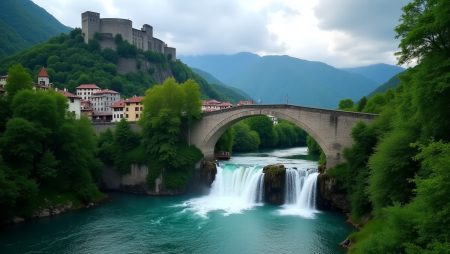
At roughly the halfway point, fifty-eight kilometres from Sarajevo, lies Konjic, a town of about twenty-five thousand people straddling the Neretva River. Konjic is famous for its sixteenth-century Ottoman bridge, built by the same architects who designed the Stari Most in Mostar. The bridge was partially destroyed during the war but has been faithfully rebuilt. The old town around the bridge is compact, with cobblestone streets, traditional wooden houses, and several good restaurants serving grilled meat and local trout.
There is a free public car park near the bridge on the eastern bank, making it easy to stop for thirty minutes or an hour. From the bridge, you can walk along the riverbank or climb a short path to a viewpoint overlooking the town. Konjic is also the gateway to the Prenj mountain range, which rises directly behind the town and offers hiking trails for those with more time. Even a brief stop here breaks the journey perfectly and gives you a taste of rural Bosnia beyond the major tourist centres.
Jablanica and the Memorial
A further twenty-five kilometres south, Jablanica is a smaller town with a dramatic wartime history. In 1943, during the Second World War, Yugoslav partisans destroyed the railway bridge over the Neretva here to slow the German advance. A section of the original bridge still stands as a memorial, and there is a small museum nearby. The town itself is less picturesque than Konjic, but the riverside setting is peaceful, and there are a few cafes where you can sit and watch the water flow past.
Jablanica is also known for its lamb restaurants. The local specialty is Janjetina, spit-roasted lamb that is served at several roadside grills on the edge of town. If you are travelling at lunchtime, this is the place to eat. Prices are lower than in Sarajevo or Mostar, and the portions are generous. Allow about forty-five minutes for a meal stop here.
The Neretva Canyon Viewpoints
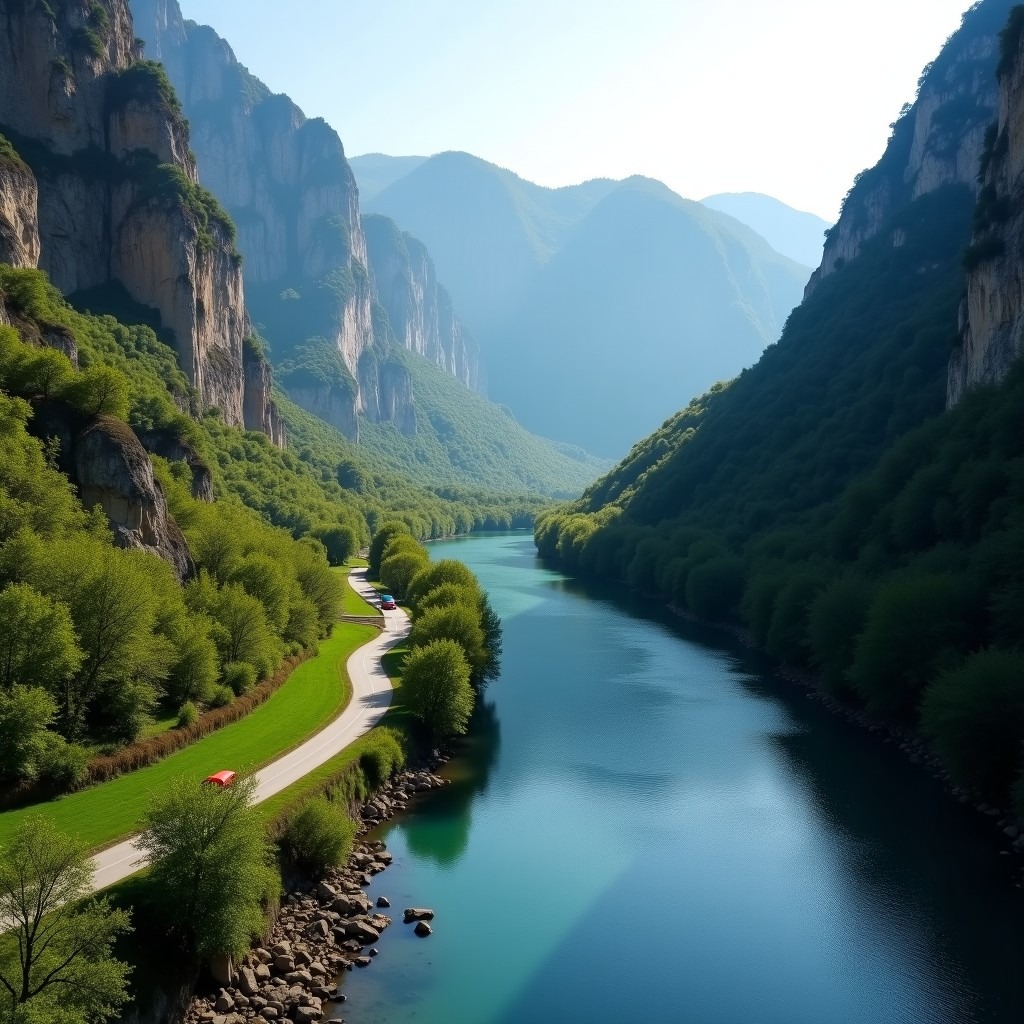
Between Jablanica and Mostar, the road enters its most dramatic section. The Neretva Canyon is over eight hundred metres deep in places, with near-vertical limestone walls rising on either side of the river. There are several informal viewpoints where you can pull over safely and take photographs. The best of these are on the left side of the road when travelling south, so plan your stops accordingly. The water in the Neretva is an unusual turquoise colour here, caused by mineral deposits from the surrounding mountains. It is one of the most photographed stretches of river in the country.
Alternative Routes and Side Trips
While the M17 is the standard route, there are a few alternatives worth considering if you have time and a suitable vehicle. The most interesting is the road from Konjic to Prozor and then south towards Gornji Vakuf and Bugojno, which rejoins the main route near Donji Vakuf. This adds about forty kilometres and an extra hour to the journey, but it passes through a less visited part of central Bosnia with rolling farmland and small villages that see almost no foreign tourists. The road surface is poorer than the M17, so a car with decent clearance is recommended.
Another option is to detour east from Jablanica to the village of Blagaj, which sits at the source of the Buna River. Blagaj is famous for its Dervish monastery built into the cliff face above a crystal-clear spring. From the M17, the turn-off is well signposted, and the drive takes about twenty minutes each way. The monastery is a popular half-day trip from Mostar, but visiting it from the north gives you a different perspective and avoids the afternoon crowds that arrive from the coast.
If you are travelling in summer and want to include the Bosnian coast, you can continue past Mostar to Neum, the country’s only seaside town. This adds another seventy kilometres to the journey but gives you the chance to swim in the Adriatic and eat fresh seafood before heading inland again. The road from Mostar to Neum is newer and faster than the M17, with more generous bends and better surfaces.
Driving Tips for the Sarajevo to Mostar Road
Bosnia and Herzegovina drives on the right, and seatbelts are compulsory for all passengers. The speed limit is sixty kilometres per hour in built-up areas, eighty on open roads, and one hundred and thirty on motorways. Since there are no motorways on this route, you will rarely exceed eighty kilometres per hour. Police do patrol the road with radar guns, especially near the outskirts of Sarajevo and in the villages along the route, so stick to the limits.
Toll roads are not an issue on the Sarajevo to Mostar route, as there are no tolls anywhere in Bosnia and Herzegovina except on the short A1 motorway near Zenica. You will not need cash for road tolls, but you should carry some local currency for fuel and food. Most petrol stations accept credit cards, but rural cafes and small shops often do not. The currency is the convertible mark, pegged to the euro at roughly two to one. Euros are widely accepted, but you may get change in marks.
Winter driving requires extra preparation. Snow chains are rarely needed on the main M17, but they are legally required to be carried in certain mountain areas if you are driving between November and April. Check with your rental company whether chains are included, and ask for local advice on conditions before setting off. Fog is a bigger hazard than snow on this route, particularly in the section between Had?i?i and Konjic. If visibility drops below fifty metres, pull over at a safe spot and wait for it to clear.
Animals on the road are a genuine risk in rural areas, especially at dawn and dusk. Sheep and goats are often herded along the road shoulders, and they can wander into the traffic without warning. Drive cautiously in the agricultural sections near Jablanica and south of Konjic, and use your horn before blind bends to warn any animals or pedestrians ahead.
Why Rent a Car for This Trip?
The bus between Sarajevo and Mostar runs several times a day and is cheap, but it offers none of the flexibility that makes this route worthwhile. The bus takes the same road and the same amount of time, but it does not stop at the viewpoints, the bridge in Konjic, or the lamb grills in Jablanica. You see the canyon through a tinted window and arrive in Mostar with only a vague memory of the journey.
With a rental car, you control the schedule. You can leave Sarajevo early and reach Mostar by mid-morning, or you can take the whole day and turn a two-hour drive into a full day of exploration. If you find a viewpoint you like, you stop. If you want to swim in the Neretva near Jablanica, you pull over. If you decide to add Blagaj or Neum to the itinerary, there is no bus timetable to worry about.
Car hire in Bosnia and Herzegovina is affordable by European standards. Economy cars start from around ten euros per day in low season, and even a compact SUV with air conditioning is rarely more than thirty euros per day. Fuel costs are lower than in Western Europe, and there are no tolls on this route. When you split the cost between two or more travellers, it is often cheaper than the bus, and far more comfortable.
One-way rentals between Sarajevo and Mostar are available from most agencies, which means you do not have to backtrack. You can pick up a car at Sarajevo Airport, drive south at your own pace, and drop the car in Mostar before continuing to Dubrovnik or Split by bus or ferry. This is a popular itinerary for travellers who want to see the best of Bosnia and Herzegovina without doubling back on themselves.
What to Do in Sarajevo and Mostar
Sarajevo and Mostar are two of the most culturally rich cities in Southeast Europe, and the drive between them is only part of the experience. In Sarajevo, the old town is a mix of Ottoman and Austro-Hungarian architecture, with the Ba??ar?ija bazaar, the Sebilj fountain, and the Gazi Husrev-beg Mosque as the main attractions. The Tunnel of Hope museum, located on the outskirts, tells the story of the siege and the underground supply line that kept the city alive during the war. Allow at least two full days to see Sarajevo properly.
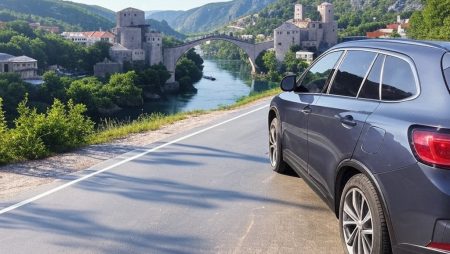
Mostar is smaller and can be explored in a day, though many visitors stay overnight to experience the old town after the day-trippers have left. The Stari Most bridge is the obvious highlight, but the old town around it is full of traditional craft shops, stone mosques, and riverside restaurants. For the brave, local divers still jump from the bridge into the Neretva below, a tradition that dates back centuries. The nearby villages of Blagaj and Po?itelj, and the Kravice waterfalls, are all easy half-day trips by car from Mostar.
Both cities have their share of war damage, and you will see bullet holes and ruined buildings that have not been repaired. This is not a sign of neglect; it is a deliberate choice to preserve the memory of what happened. The contrast between the beautiful old towns and the visible scars of conflict is part of what makes Bosnia and Herzegovina such a powerful place to visit. A rental car lets you explore both the beauty and the history at your own pace, without the constraints of a guided tour.
Booking Your Rental Car
We compare rates from trusted rental partners in Sarajevo, Mostar, and at Sarajevo International Airport. Enter your pick-up location, your dates, and the car type you need, and we will show you a range of options from international brands and reliable local agencies. The booking takes less than two minutes, and your confirmation voucher arrives by email instantly. Free cancellation is available on most rates up to forty-eight hours before collection.
Our prices include all mandatory taxes and third-party insurance. Optional extras such as collision damage waiver, additional drivers, and child seats are clearly itemised, so you can see the total cost before you confirm. We quote transparent rates with no hidden fees, which means no surprise charges when you collect the keys. If you need a one-way rental from Sarajevo to Mostar, winter equipment for a January trip, or advice on cross-border travel to Croatia or Montenegro, our support team is ready to help.
The distance between Sarajevo and Mostar is short, but the journey is one of the best road trips in the Balkans. With a rental car, you can turn a simple transfer into a day of exploration, stopping at medieval bridges, mountain viewpoints, and riverside grills along the way. Book your car today and see Bosnia and Herzegovina the way it was meant to be seen: from the driver’s seat, with the windows down and the Neretva Canyon unfolding ahead of you.
Ready to book? Visit our homepage for the best hire car deals.