Tuzla by Car: Salt Lakes, Old Town and Day Trips in Northeast Bosnia
Tuzla is one of Bosnia and Herzegovina’s most underrated cities. It does not have the fame of Sarajevo or the bridge of Mostar, but it offers something uniquely Bosnian: salt lakes in the city centre, a lively old town, and a location that makes it a handy base for exploring the northeast. If you are hiring a car in Bosnia, Tuzla is worth at least a day on your itinerary. Here is what to know before you drive there.
Getting to Tuzla by Car
Tuzla sits in the northeast of Bosnia, roughly 130 kilometres from Sarajevo and 170 kilometres from Banja Luka. The most common approach is via the M18 from Sarajevo, a decent two-lane road that winds through the mountains before flattening out near Živinice. The drive takes about two hours in normal conditions, though fog can slow things down in autumn and winter.
From the Croatian border at Orasje, it is only 45 minutes on the A1 and local roads. If you are arriving from Serbia, the crossing at Brezik near Bijeljina puts you about an hour away. Road signs are in both Latin and Cyrillic, so navigation is straightforward with a phone mount and offline maps.
Why Hire a Car in Tuzla?
Tuzla has an airport — Tuzla International — but it is small and handles mostly low-cost carriers on seasonal routes. Most visitors arrive by road, either picking up a rental at Sarajevo or Banja Luka and driving across. Having your own vehicle matters here because the best attractions around Tuzla are scattered, and public transport beyond the city limits is patchy.
The city itself is compact enough to walk, but a car is essential for day trips to Srebrenik Castle, the Lukavac hills, or the spa town of Slavinovici. If you are continuing into Serbia or Croatia afterwards, Tuzla is a logical stop to break up longer drives.
Parking in Tuzla: What to Expect
Parking in Tuzla is far less stressful than in Sarajevo. The city centre has several paid car parks around Trg Slobode and the Salt Lakes, with rates running at roughly 1 to 2 convertible marks per hour (about 0.50 to 1 euro). Street parking is available on side roads, though spaces fill quickly on market days.
Near the old town, the best bet is the underground garage beneath the Pannonian Lakes complex. It is covered, reasonably priced, and puts you within a five-minute walk of the main square. If you are staying overnight, most hotels and guesthouses have private parking or can direct you to a nearby lot. Always check whether your accommodation includes parking before you book, as some older buildings in the centre do not have space.
The Pannonian Salt Lakes: Tuzla’s Signature Experience
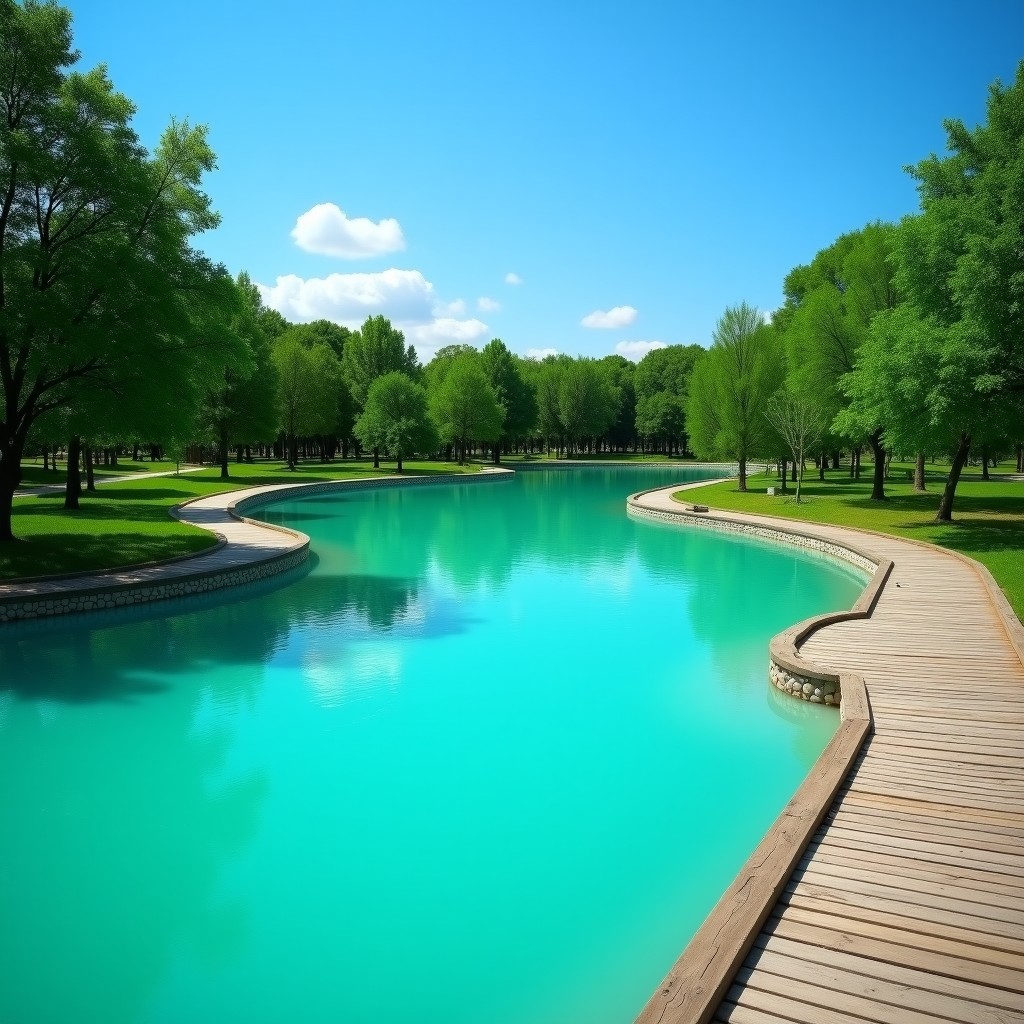
The Pannonian Lakes are the main reason people stop in Tuzla. Three artificial salt-water lakes sit right in the city centre, fed by the same brine springs that made Tuzla one of Europe’s oldest salt-producing settlements. The water is warm, mineral-rich, and supposedly good for skin conditions. Locals swim here all summer, and the surrounding park has cafes, walking paths, and a small archaeological display about the city’s Roman-era saltworks.
Entry costs a few marks per person, and parking is available in the adjacent garage. The lakes can get busy on hot weekends in July and August, so arriving before 10 am gives you the best chance of a quiet swim. Bring sandals, as the salt crusts on the wooden walkways can be rough on bare feet.
Tuzla Old Town and What to See on Foot
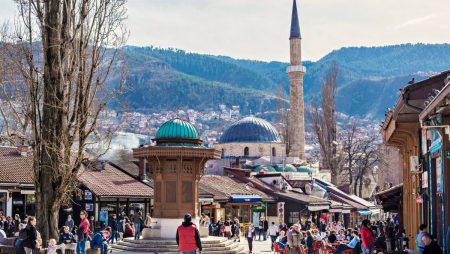
Tuzla’s old town is smaller than Sarajevo’s Bascarsija but has its own character. The central square, Trg Slobode, is lined with cafes and the odd socialist-era building that somehow fits the scene. Walk south to the Karacic House, a traditional Bosnian wooden house now operating as a small museum, or north to the old Orthodox church near the salt museum.
The city is known for its salt history, and the small museum near the lakes tells the story well without demanding too much time. If you prefer food over history, the cevapi and burek in Tuzla are as good as anywhere in Bosnia, and the prices are lower than in the tourist-heavy cities further south.
Day Trips from Tuzla by Car
Tuzla’s real value is as a jumping-off point for the surrounding region. With a car, you can cover several worthwhile spots in a single day.
Srebrenik Castle (40 minutes)
One of the best-preserved medieval castles in Bosnia sits on a hill above Srebrenik, a short drive northwest of Tuzla. The road is narrow in places but paved all the way to the base. The castle itself is small, but the views over the Tinja valley are worth the trip. There is no entry fee, and parking is informal at the bottom of the hill.
Lukavac Hills and Lake Modrac (25 minutes)
Lake Modrac is a reservoir south of Tuzla popular with local fishermen and weekend picnickers. The surrounding hills have walking trails and a few viewpoints over the water. It is not a dramatic landscape, but it is peaceful and a good alternative if the salt lakes are too crowded.
Bijeljina and the St. Sava Church (45 minutes)
Bijeljina is the main city of northeast Bosnia, closer to the Serbian border. It is a flat, spread-out town with one standout sight: the St. Sava Orthodox church, one of the largest in the region. If you are driving toward Serbia, Bijeljina is a convenient place to refuel and grab lunch before the border.
The Spa at Slavinovici (50 minutes)
The thermal spa at Slavinovici is a local secret. The water here is mineral-rich and supposedly helps with joint and muscle complaints. The facilities are basic compared to Western European spas, but the prices reflect that. It is a relaxing way to end a day of driving, especially in winter when the contrast between the cold air and warm water is at its best.
Driving Tips for the Tuzla Region
Roads around Tuzla are generally in decent condition, but there are a few things to keep in mind. The M18 from Sarajevo has sections where the surface is uneven after winters, so take it steady on corners. Fuel stations are common on the main roads, but if you are heading into the hills around Srebrenik or Lukavac, fill up before you leave town.
Winter driving requires extra caution. Tuzla sits at a lower elevation than Sarajevo, so snow is less severe, but the mountain passes on routes to the south can ice over quickly. Winter tyres are legally required from 15 November to 15 April, and the police do check. If your rental does not have them fitted, ask the supplier to swap them before you leave.
For general advice on Bosnian road rules, fuel costs, and what documents to carry, see our full guide to driving in Bosnia.
Where to Hire a Car for Tuzla
Tuzla Airport has a small number of rental desks, but the choice is limited compared to Sarajevo or Banja Luka. Most travellers pick up a vehicle at Sarajevo and drive across, which also gives you the freedom to stop at places like Jablanica or Konjic on the way.
If you are starting from the north, Banja Luka has more suppliers and better rates. The drive south takes about three and a half hours via the M4 and M18, passing through some of Bosnia’s quietest countryside. Either way, book in advance during summer, as fleet sizes are smaller than in Western Europe and demand can spike.
Related Destinations
Looking for more places to explore by car in Bosnia? Also see our guides to Sarajevo, Mostar, Bihać, and Trebinje. If you are planning a longer trip, our cross-border travel guide covers what you need to know about driving into Croatia, Serbia, and Montenegro.
Ready to book? Visit our homepage for the best hire car deals.